
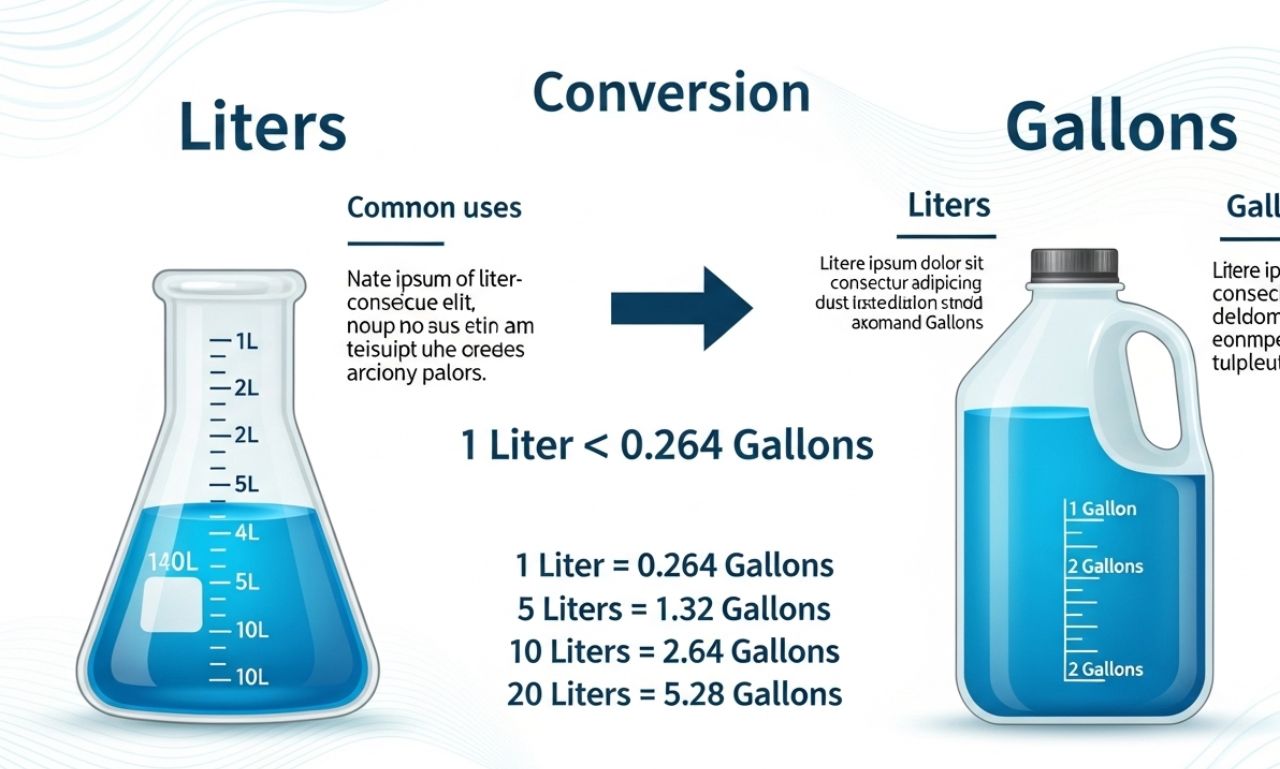
Converting lite rs to gall ons is one of the most common volume conversions used around the world. Whether you are measuring fuel, water, beverages, or industrial liquids, understanding how liters relate to gallons helps ensure accuracy. Since different countries use different measurement systems, knowing how to convert between these units is essential for travel, trade, science, and daily life.
Understanding Liters and Gallons
A liter is a metric unit of volume commonly used in most countries. It is part of the International System of Units (SI) and is widely used for measuring liquids such as water, milk, and fuel.
A gallon, on the other hand, is primarily used in the United States and a few other countries. There are two main types of gallons:
-
US Liquid Gallon
-
Imperial Gallon (used in the UK and some Commonwealth countries)
It is important to know which gallon measurement you are using because they are not the same size.
How to Convert Liters to Gallons
The standard conversion for liters to US gallons is:
1 liter = 0.264172 US gallons
For Imperial gallons:
1 liter = 0.219969 Imperial gallons
To convert li ters to gall ons manually, you multiply the number of liters by the appropriate conversion factor.
Example Conversions
-
5 liters × 0.264172 = 1.32086 US gallons
-
10 liters × 0.264172 = 2.64172 US gallons
-
20 liters × 0.264172 = 5.28344 US gallons
For Imperial gallons:
-
5 liters × 0.219969 = 1.099845 Imperial gallons
The difference may seem small at first, but it becomes significant when converting large quantities.
Why Liters to Gallons Conversion Matters
1. Fuel Measurement
Fuel efficiency in the United States is often measured in miles per gallon (MPG), while many other countries measure fuel consumption in liters per 100 kilometers. If you are importing a vehicle or comparing fuel efficiency internationally, converting liter s to gal lons becomes necessary.
2. Cooking and Recipes
Some recipes use liters, while others use gallons or quarts. Accurate conversion ensures the correct balance of ingredients, especially when cooking large quantities.
3. Travel and Relocation
If you move between countries that use different measurement systems, you may encounter different units at gas stations, grocery stores, or hardware shops. Understanding the relationship between liters and gallons prevents confusion.
4. Industrial and Scientific Use
Industries dealing with chemicals, pharmaceuticals, or beverages frequently convert between metric and US customary units. Precision is critical in these fields.
US Gallon vs Imperial Gallon
The US gallon equals approximately 3.785 liters.
The Imperial gallon equals approximately 4.546 liters.
This means the Imperial gallon is larger than the US gallon. When converting lite rs to ga llons, always confirm which gallon standard is required.
For example:
-
10 liters equals about 2.64 US gallons.
-
10 liters equals about 2.20 Imperial gallons.
That difference of nearly half a gallon can significantly affect calculations in commercial settings.
Quick Reference Table
Here is a simple reference for common conversions (US gallons):
-
1 liter ≈ 0.26 gall ons
-
2 liters ≈ 0.53 gall ons
-
5 liters ≈ 1.32 gal lons
-
15 liters ≈ 3.96 gall ons
-
50 liters ≈ 13.21 gall ons
-
100 liters ≈ 26.42 gal lons
For quick mental math, you can estimate that 4 liters are slightly more than 1 gallon (US).
Tips for Accurate Conversion
-
Always confirm whether you need US or Imperial gallons.
-
Use precise decimal values for scientific or financial calculations.
-
Round only when necessary.
-
Double-check conversions when dealing with large volumes.
Liters to Gallons in Everyday Life
Many bottled beverages are sold in 1-liter or 2-liter containers, especially soft drinks. In contrast, large water storage tanks in the US are often measured in gallons. Garden pools, aquariums, and water heaters are also commonly labeled in gallons.
Understanding the relationship between liters and gallons helps consumers make better purchasing decisions. For example, knowing that a 20-liter water container equals about 5.28 US gallons makes it easier to compare products.
Conclusion
Converting lite rs to gallo ns is simple once you understand the correct conversion factors. The key is remembering that 1 liter equals approximately 0.264 US gallons or 0.22 Imperial gallons. Because the two gallon systems differ, identifying which one you need is crucial for accuracy.
Whether you are measuring fuel, cooking ingredients, or managing industrial supplies, mastering li ters to gall ons conversion ensures clarity and precision in everyday tasks.