
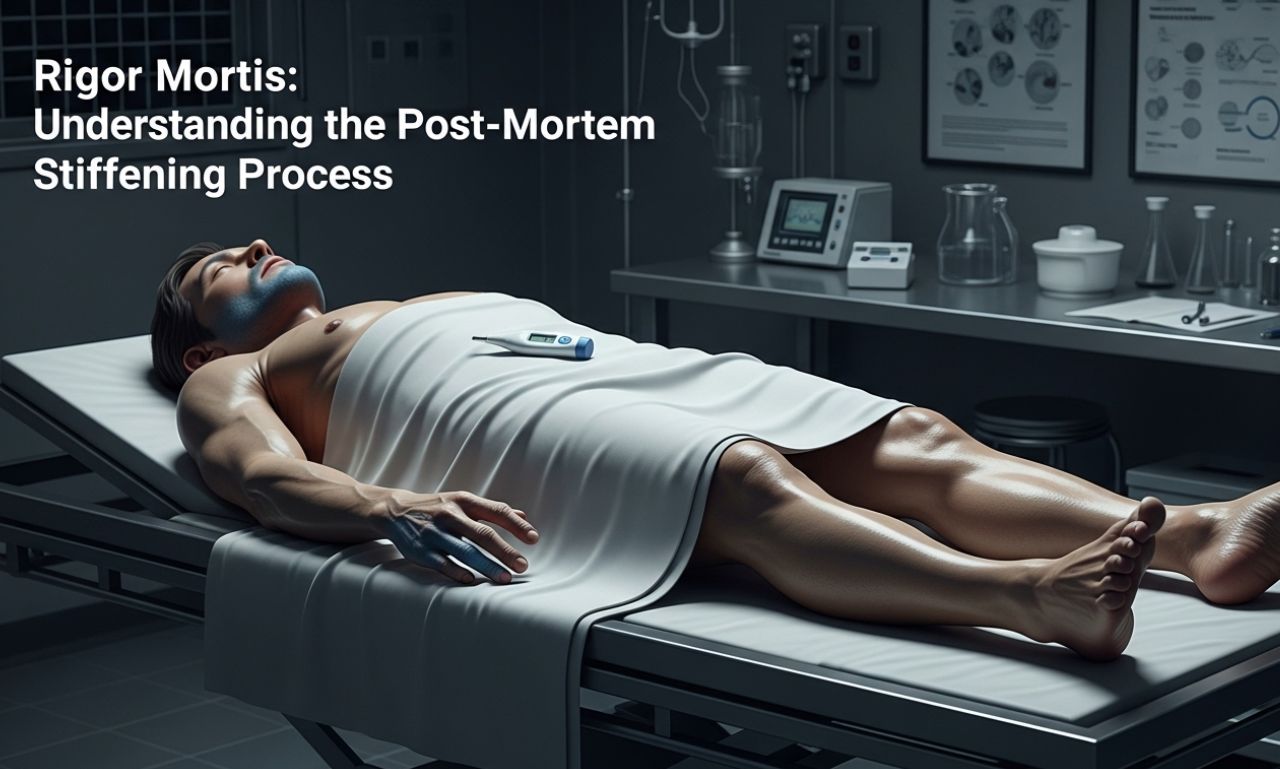
Rigor m ortis is a post-mortem phenomenon characterized by the stiffening of muscles after death. It occurs due to chemical changes in the muscle fibers when the body stops producing energy. The process provides crucial information in forensic investigations, helping experts estimate the time of death. Understanding rigor mo rtis can also give insights into the biological processes that continue briefly after life ceases.
The Science Behind Rigor Mortis
Rigor mor tis results from the depletion of adenosine triphosphate (ATP) in muscle cells. ATP is required for muscle relaxation, and its absence causes muscles to become rigid. Key factors include:
-
Calcium Ion Accumulation: After death, calcium ions leak into muscle cells, triggering contraction.
-
ATP Depletion: Without ATP, muscles cannot relax, leading to stiffness.
-
Temperature Effects: Environmental temperature significantly influences the speed of rigor mo rtis onset and resolution.
This biochemical cascade explains why rigor mo rtis is a predictable but temporary post-mortem change.
Stages of Rigor Mortis
Rigor mor tis progresses in several stages, which are important in forensic analysis:
1. Onset Phase
Within 2–6 hours after death, the muscles gradually stiffen. Smaller muscles, such as those in the face and fingers, are affected first.
2. Full Development
By 12 hours, rigor mort is is usually at its peak, affecting most skeletal muscles throughout the body. During this stage, the body becomes rigid, making movement difficult.
3. Resolution Phase
After approximately 24–48 hours, the muscles begin to relax as decomposition advances. The exact timing depends on environmental conditions,such as temperature and humidity.
Factors Influencing Rigor Mortis
Several variables can accelerate or delay the onset of rigor m ortis:
-
Ambient Temperature: Warmer conditions accelerate rigor, while cold slows it.
-
Physical Activity Before Death: Strenuous activity can deplete ATP faster, causing earlier onset.
-
Body Weight and Fat Content: Leaner bodies may show rigor morti s sooner than heavier bodies.
-
Cause of Death: Certain deaths, like those involving poisoning or hypothermia, can affect muscle stiffness differently.
Forensic experts consider these factors when using rigor mor tis to estimate post-mortem intervals.
Forensic Importance of Rigor Mortis
Rigor mo rtis is a valuable tool in forensic investigations. Its predictable progression allows forensic pathologists to estimate time of death within certain limits. When combined with other post-mortem signs, such as livor mortis (settling of blood) and body temperature, rigor mortis provides critical evidence in criminal cases.
Differentiating Rigor Mortis from Other Post-Mortem Changes
It is important to distinguish rigor m ortis from:
-
Algor Mortis: The cooling of the body after death.
-
Livor Mortis: The purplish discoloration caused by blood pooling.
-
Decomposition: The breakdown of tissues, which occurs after rigor mortis resolves.
Understanding these differences ensures accurate forensic interpretation.
Myths and Misconceptions About Rigor Mortis
Several common misconceptions exist regarding rigor mor tis:
-
“Rigor mor tis occurs immediately after death”: In reality, there is a delay of 2–6 hours before onset.
-
“Rigor m ortis lasts indefinitely”: It resolves naturally within 1–2 days.
-
“All muscles stiffen simultaneously”: Smaller muscles stiffen first, followed by larger muscle groups.
Correct knowledge helps both medical professionals and forensic investigators avoid errors.
Practical Implications Beyond Forensics
While rigor mortis is primarily studied in forensic contexts, understanding it has other applications:
-
Medical Training: Helps students understand post-mortem physiology.
-
Animal Research: Studying rigor mortis in animals can inform food safety and meat processing practices.
-
Disaster Management: Helps authorities in identifying bodies in natural disasters.
The process demonstrates the continuation of biological phenomena even after death.
Conclusion:
Rigor mortis is a natural, predictable stiffening of muscles after death, caused by ATP depletion and calcium accumulation. Its stages, onset, and resolution provide essential information in forensic investigations and deepen our understanding of post-mortem physiology. Recognizing the factors that influence rigor mortis ensures accurate interpretation, whether in criminal investigations, medical education, or research applications.