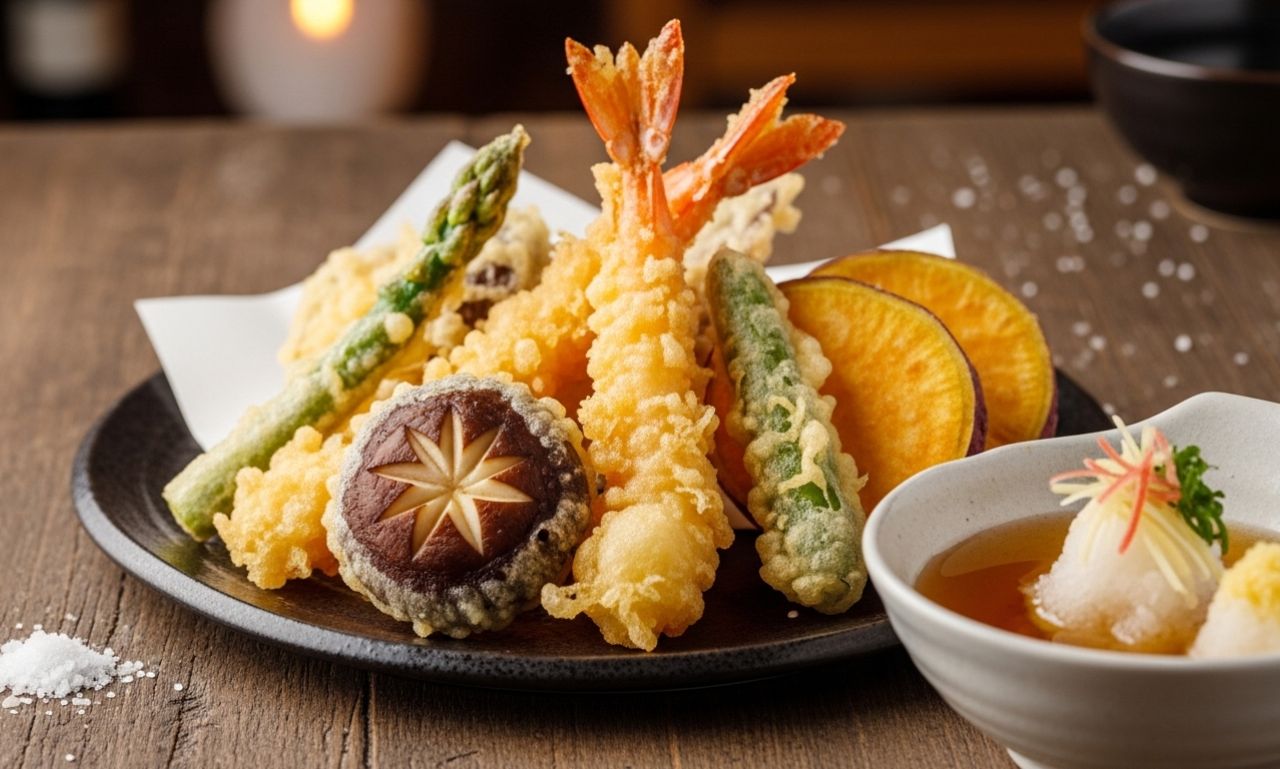
Tempura is one of Japan’s most famous culinary creations, admired worldwide for its light texture and delicate taste. This iconic dish features seafood and vegetables coated in a thin batter and deep-fried to golden perfection. Unlike heavy fried foods, tempura is known for its crisp exterior and airy bite, making it a favorite in both traditional and modern Japanese cuisine.
What Is Tempura?
Tempura is a Japanese cooking method where ingredients are lightly battered and fried in hot oil. The batter is made using flour, cold water, and sometimes egg, creating a thin coating that does not absorb excess oil.
Tempura is commonly served with a dipping sauce and grated radish, allowing diners to enjoy the natural flavors of the ingredients. It is often paired with rice, noodles, or enjoyed on its own as a main dish or appetizer.
The History of Tempura
Origins of Tempura
The history of tempura dates back to the 16th century when Portuguese traders introduced batter-fried cooking techniques to Japan. Over time, Japanese chefs refined the method, developing a lighter batter and a more delicate frying process.
The word “tempura” is believed to come from a Latin term related to fasting days, reflecting its early association with seafood dishes.
Tempura in Japanese Food Culture
By the Edo period, tempura became popular street food in Japan. Vendors sold freshly fried seafood and vegetables, making it accessible to people from all walks of life. Today, tempura ranges from casual meals to high-end restaurant offerings.
Common Ingredients Used
Seafood
Seafood is one of the most popular choices for tem pura. Shrimp tem pura is especially famous, known for its crisp coating and tender interior. Other seafood options include squid, white fish, scallops, and shellfish.
Vegetable
Vegetable tem pura highlights seasonal produce. Common vegetables include sweet potato, eggplant, pumpkin, mushrooms, green beans, and lotus root. These ingredients provide natural sweetness and texture when fried.
Seasonal Variety
Tem pura often reflects the seasons, with chefs choosing ingredients that are freshest at the time. This seasonal focus is a key aspect of traditional Japanese cooking.
How Is Made
Preparing the Batter
The batter for tem pura is mixed lightly to avoid overworking the flour. Cold water is essential, as it helps create a crisp texture during frying. Lumps in the batter are acceptable and even encouraged.
Frying Technique
Ingredients are dipped in batter and fried quickly in hot oil. The goal is to cook the coating until crisp while keeping the inside tender and moist.
Achieving the Perfect Texture
Proper temperature control is critical in tem pura cooking. Oil that is too hot can burn the batter, while oil that is too cool can make the coating greasy.
Types of Tempura Dishes
Tempura as a Main Dish
Tempura can be served as a standalone meal with rice and soup. In this form, it is often arranged neatly and eaten fresh for the best texture.
Tempura with Noodles
Tempura is commonly paired with udon or soba noodles. The contrast between hot noodles and crispy tem pura creates a satisfying combination.
Tempura Rice Bowls
Tem pura donburi, or tem pura served over rice with sauce, is another popular variation. The sauce adds sweetness and depth to the dish.
Cultural Importance
Tempura in Traditional Dining
In Japan, tem pura is often enjoyed at specialty restaurants where chefs fry each piece to order. This ensures optimal freshness and texture.
Tempura in Everyday Life
Despite its refined reputation, tem pura is also a common home-cooked dish. Many households prepare simple vegetable or shrimp tem pura for family meals.
Tempura in Japanese Media
Tem pura frequently appears in Japanese television shows, cooking programs, and anime, reinforcing its status as a beloved national dish.
Health Considerations
Light Frying Method
Compared to heavily breaded fried foods, tem pura uses a thin batter that absorbs less oil. This makes it lighter and easier to digest.
Balanced Meal Options
When paired with vegetables and seafood, tem pura can be part of a balanced diet. Portion control and ingredient choice play an important role in its nutritional value.
Customizable for Modern Diets
Tem pura can be adapted using alternative flours or plant-based ingredients to suit different dietary preferences.
Tempura vs Other Fried Foods
Temp ura differs from other fried dishes due to its light batter and cooking technique. Unlike breaded foods, tem pura focuses on enhancing the ingredient rather than masking it.
This unique approach sets tem pura apart and contributes to its global appeal.
Global Popularity
Tempura Around the World
As Japanese cuisine gained international recognition, tem pura became a staple on restaurant menus worldwide. Many cultures have embraced and adapted the dish.
Modern Tempura Innovations
Chefs around the world experiment with tem pura by using non-traditional ingredients such as cheese, fruits, and fusion flavors. These innovations keep the dish relevant and exciting.
The Future
With its versatility and refined simplicity, tem pura is expected to remain a favorite in global cuisine for years to come.
Conclusion
Tem pura is a timeless Japanese dish that combines simplicity, technique, and flavor. From its historical roots to its modern interpretations, temp ura continues to delight food lovers around the world.
Its light texture, seasonal ingredients, and cultural significance make tem pura more than just fried food—it is a true culinary art.