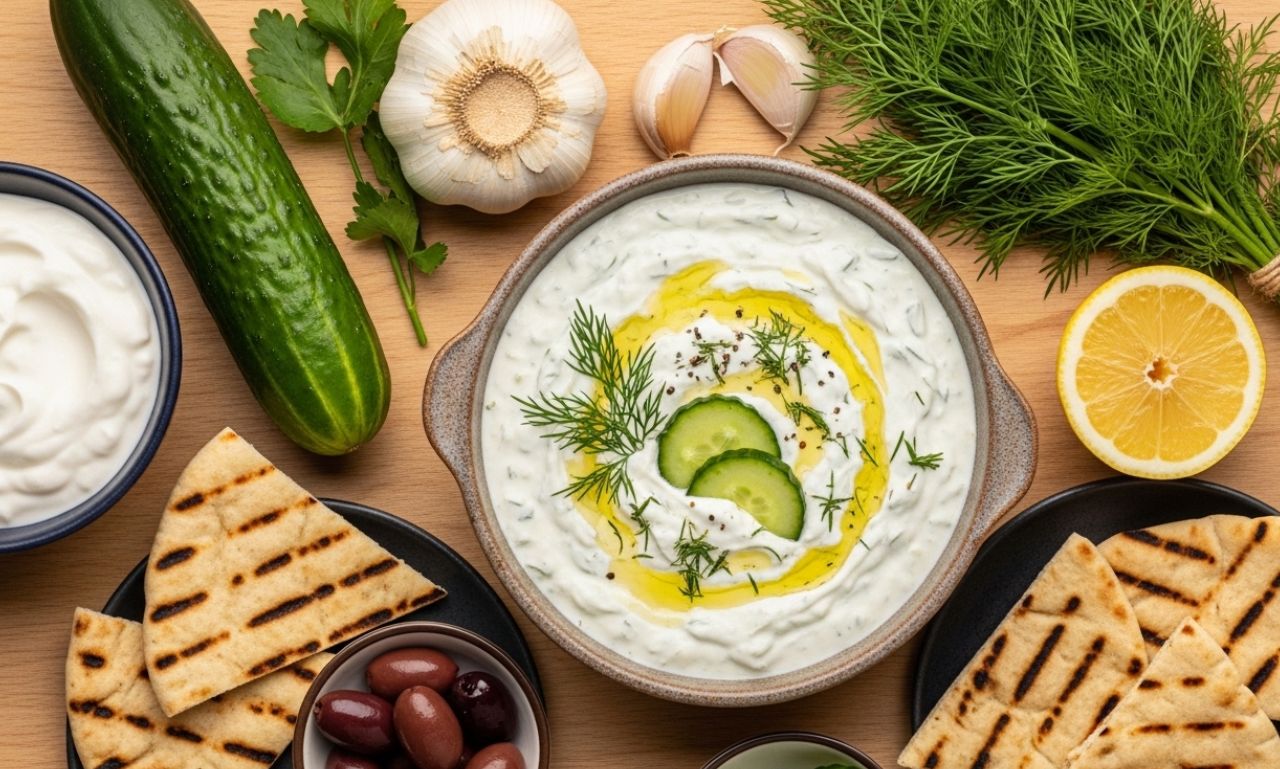
Tzatziki is a creamy, refreshing sauce originating from Greece, widely loved in Mediterranean cuisine for its tangy, garlicky flavor and versatility. Made primarily from yogurt, cucumber, garlic, olive oil, and fresh herbs like dill or mint, tzatziki has become a staple in both traditional and modern dishes around the world. Understanding how to make, store, and serve tzatziki will allow you to enjoy this flavorful condiment at its best.
What is Tzatziki?
Tzatziki is a cold yogurt-based sauce commonly served as a dip, condiment, or accompaniment to grilled meats, vegetables, and bread. Its roots can be traced to Greek cuisine, although variations exist throughout the Mediterranean and Middle Eastern regions. The blend of creamy yogurt with crisp cucumber and aromatic herbs creates a refreshing and versatile flavor profile.
Key Ingredients
-
Greek Yogurt: Provides a thick, creamy base and tangy taste.
-
Cucumber: Adds crunch and freshness; often grated or finely chopped.
-
Garlic: Gives a pungent, flavorful kick.
-
Olive Oil: Enhances richness and smooth texture.
-
Lemon Juice or Vinegar: Adds acidity for balance.
-
Fresh Herbs: Dill, mint, or parsley bring aromatic notes.
-
Salt and Pepper: Essential for seasoning.
How to Make Tzatziki
Making tzatziki is simple and quick, requiring minimal ingredients:
-
Prepare the Cucumber: Peel and grate the cucumber, then squeeze out excess water to prevent a watery sauce.
-
Mix Yogurt and Garlic: Combine Greek yogurt with minced garlic in a bowl.
-
Add Cucumber and Herbs: Stir in the cucumber, fresh herbs, and a drizzle of olive oil.
-
Season: Add lemon juice, salt, and pepper to taste.
-
Chill: Refrigerate for at least 30 minutes to allow flavors to meld.
Optional variations include adding a pinch of cayenne for heat, or substituting mint for dill for a different herbal flavor.
Uses of Tzatziki
Tzatziki is incredibly versatile in both cooking and serving:
-
As a Dip: Serve with pita bread, fresh vegetables, or crackers.
-
With Grilled Meats: Pairs perfectly with lamb, chicken, or beef kebabs.
-
In Sandwiches or Wraps: Adds creaminess and flavor to gyros, souvlaki, or veggie wraps.
-
As a Salad Dressing: Thin with olive oil or lemon juice to drizzle over salads.
Its cooling effect makes it particularly appealing alongside spicy dishes or rich foods, balancing strong flavors with creamy freshness.
Health Benefits of Tzatziki
Tzatziki is not only delicious but also nutritious:
-
Probiotics: Greek yogurt provides beneficial bacteria for gut health.
-
Low in Calories: A lighter alternative to creamy sauces like mayonnaise or sour cream.
-
Vitamins and Minerals: Cucumber, garlic, and herbs contribute vitamins A, C, and K.
-
Healthy Fats: Olive oil adds heart-healthy monounsaturated fats.
This combination makes tzatziki a healthy addition to meals without compromising flavor.
Tips for Perfect Tzatziki
-
Use Thick Greek Yogurt: Avoid watery yogurt to maintain a creamy texture.
-
Drain Cucumber Well: Removing excess moisture prevents a thin or runny sauce.
-
Let it Rest: Chilling allows flavors to develop and intensify.
-
Fresh Ingredients: Use fresh herbs and lemon juice for maximum flavor.
-
Adjust Garlic: Taste before serving, as raw garlic can be strong.
Tzatziki Around the World
While Greek tzatziki is most famous, variations exist in other countries:
-
Turkey: Called cacık, often thinner and served as a cold soup.
-
Middle East: Similar yogurt-based dips exist with herbs and cucumber, such as laban bi khyar.
-
Modern Twists: Some recipes incorporate avocado, roasted red pepper, or spices for unique flavors.
These adaptations showcase tzatziki’s versatility and global appeal.
Conclusion
Tzatziki is more than just a sauce—it’s a symbol of Mediterranean cuisine’s fresh, wholesome, and vibrant flavors. Easy to make, healthy, and versatile, tzatziki can enhance a wide range of dishes, from grilled meats to sandwiches and salads. By using quality ingredients and following simple preparation tips, you can enjoy authentic tzatziki at home and experience the perfect balance of creaminess, tang, and freshness.