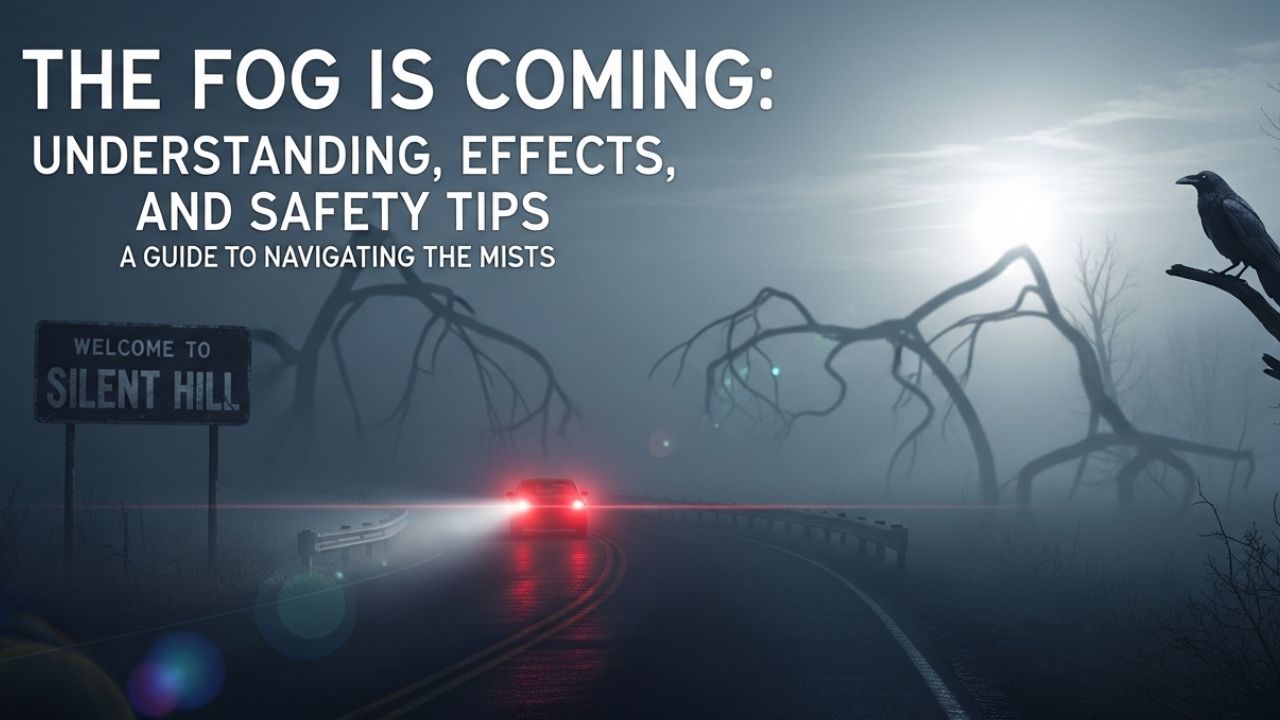
“The fog is coming” is more than just a poetic statement; it’s a warning and an environmental phenomenon that impacts daily life, transportation, and even safety. Fog occurs when water vapor condenses into tiny droplets suspended in the air, reducing visibility. From early morning commutes to evening drives, understanding the nature and impact of fog can help individuals prepare and respond safely.
This article explores what it means when the fog is coming, its causes, effects, and practical tips for safety during foggy conditions.
What Is Fog?
Fog is essentially a cloud that forms near the ground. When the air near the surface cools to the dew point, moisture condenses into fine water droplets, creating a dense mist that reduces visibility.
Types of Fog
- Radiation Fog: Forms on clear, calm nights as heat radiates from the ground.
- Advection Fog: Occurs when moist air moves over cooler land or water.
- Valley Fog: Forms in low-lying areas and valleys, often thick and persistent.
- Freezing Fog: Fog that occurs in subzero temperatures, depositing ice on surfaces.
When the fog is coming, it is important to know the type and expected intensity to anticipate its effects.
Causes of Fog
Fog forms when the air temperature and dew point are close. Several factors contribute:
- High Humidity: Moist air increases the likelihood of condensation.
- Calm Winds: Still air prevents the dispersion of water droplets.
- Temperature Inversions: When warm air traps cooler air below, fog can form.
- Proximity to Water Bodies: Lakes, rivers, and oceans provide moisture that helps fog develop.
Understanding the causes helps in predicting when the fog is coming and planning accordingly.
Effects of Fog
Fog can have wide-ranging impacts on everyday life.
1. Reduced Visibility
The most immediate effect is reduced visibility, which affects transportation, including driving, cycling, and air travel.
2. Traffic Delays and Accidents
Fog increases the risk of accidents because drivers struggle to see the road, obstacles, and other vehicles.
3. Disruption to Aviation and Shipping
Airports may experience delays or cancellations, and ships navigating coastal waters must reduce speed.
4. Impact on Daily Life
Fog can cause dampness, reduce outdoor visibility, and even affect mood for some individuals due to prolonged gray skies.
Safety Tips When the Fog Is Coming
If the fog is coming, it’s essential to take precautions:
Driving Safety
- Slow down and maintain a safe distance from other vehicles.
- Use low-beam headlights or fog lights; avoid high beams.
- Follow road markings to stay in the lane.
- Avoid sudden braking or lane changes.
Walking or Cycling
- Wear reflective clothing or accessories.
- Carry a flashlight to increase visibility.
- Be cautious when crossing streets.
Home and Health Precautions
- Keep windows and doors closed to prevent dampness indoors.
- Fog can worsen respiratory conditions; individuals with asthma should be cautious.
By following these tips, individuals can minimize risks and navigate safely during foggy conditions.
Fog in Culture and Literature
Fog often appears in literature and media as a symbol of mystery, uncertainty, or transition. Phrases like “the fog is coming” can carry metaphorical meanings, representing unclear circumstances, impending change, or hidden challenges.
Examples in Culture
- In literature, fog sets a suspenseful or ominous tone.
- In movies, foggy scenes heighten drama or tension.
- Folklore often associates fog with spirits or supernatural phenomena.
These cultural associations make fog both a literal and figurative concept in human storytelling.
Environmental and Scientific Importance
Fog also has ecological and environmental significance:
- Provides moisture to plants and ecosystems in dry regions.
- Reduces water evaporation from soil, benefiting agriculture.
- Plays a role in the hydrological cycle, especially in coastal areas.
Scientists study fog to understand climate patterns, weather forecasting, and ecosystem dynamics.
Conclusion:
When the fog is coming, awareness and preparation are key. From understanding its causes to following safety measures, individuals can navigate daily life without unnecessary risk. Fog, while sometimes disruptive, is a fascinating natural phenomenon that influences weather, transportation, and even culture.
By respecting its power and staying informed, you can safely enjoy the mysterious beauty of a foggy day while minimizing hazards.