
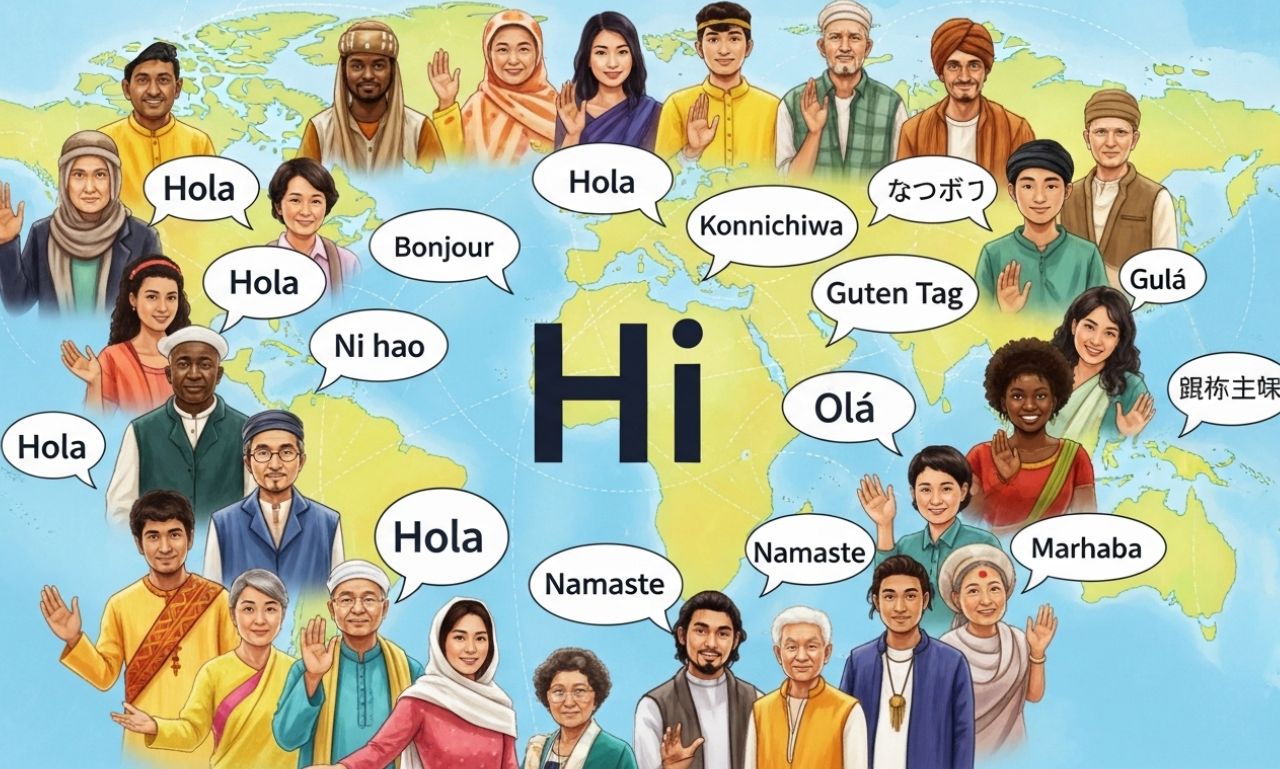
The word “Hi” is one of the simplest, most universal greetings in the English language. Despite being only two letters, it has the power to break the ice, initiate conversations, and establish friendly connections. Whether in face-to-face interaction, emails, or social media messages, “Hi” serves as a small yet effective tool for social engagement.
This article explores the history, significance, and modern uses of “Hi,” highlighting why such a short word carries so much meaning in human communication.
Origins and History of “Hi”
The greeting “Hi” originated in the 19th century in the United States as a casual alternative to “hello” or “good day.” Early references appear in personal letters and informal correspondence, where it was primarily used among friends and acquaintances.
Over time, “Hi” spread across English-speaking countries and became a standard greeting in both spoken and written communication. Its brevity, simplicity, and friendly tone contributed to its rapid adoption in daily life.
Cultural Significance of “Hi”
Global Equivalents
While “Hi” is English-specific, nearly every language has an equivalent: “Hola” in Spanish, “Salut” in French, “Ciao” in Italian, and “Nǐ hǎo” in Mandarin, for example. The role of these greetings is universal — signaling acknowledgment, politeness, and approachability.
Social Impact
Saying “Hi” conveys acknowledgment and opens the door for conversation. In professional settings, a friendly greeting can build rapport and foster collaboration. In personal contexts, it establishes warmth and friendliness. The word may be small, but its social effects are significant.
“Hi” in Digital Communication
With the rise of smartphones, emails, and social media, “Hi” has adapted to digital platforms. In emails, “Hi [Name]” is widely accepted as a polite and approachable opening. On messaging apps, variations such as “Hey,” “Hiya,” or “Hii” convey familiarity, excitement, or playfulness.
Emojis often accompany “Hi” to express tone or emotion, adding layers of meaning that text alone may not convey. Whether sending a message to a friend or introducing oneself in a professional thread, “Hi” remains an essential tool for initiating interaction.
Psychological and Social Benefits
Saying “Hi” can have positive psychological effects. It signals recognition, reduces social barriers, and can improve mood for both the speaker and the listener. Social psychology studies suggest that initiating greetings helps foster trust, cooperation, and connection.
Even a brief “H i” can turn a stranger into a conversation partner or transform a neutral environment into a welcoming space. Its simplicity is part of its strength.
Tips for Using “Hi” Effectively
-
Adapt to context: Casual “H i” works well among peers, while professional emails may require “Hello” or “Good morning.”
-
Use names: “H i Sarah” adds a personal touch and strengthens engagement.
-
Consider tone: Emojis, punctuation, and capitalization help convey emotion in digital communication.
-
Observe culture: Some workplaces or cultures prefer formal greetings, so adjust accordingly.
-
Pair with body language: In person, a smile or nod reinforces the greeting’s friendliness.
Variations of “H i”
Different variations of “H i” exist to convey nuanced meanings:
-
Hey: Casual and often playful.
-
H iya: Friendly and informal.
-
H ii/H iii: Often conveys excitement or enthusiasm in digital messaging.
These variations help individuals tailor their greetings based on context, audience, and medium.
Conclusion:
Despite its brevity, “H i” remains a powerful tool for communication. Its history, cultural significance, and adaptability in modern digital spaces make it a cornerstone of human interaction.
By understanding its nuances and using it thoughtfully, individuals can create connections, foster goodwill, and begin conversations effectively. Sometimes, the simplest words have the greatest impact, and “H i” exemplifies that truth perfectly.