
A rivet is a fundamental component in construction, manufacturing, and mechanical engineering. Understanding the rivet definition is crucial for students, engineers, and DIY enthusiasts alike, as rivets are widely used to join materials securely.
Rivet Definition
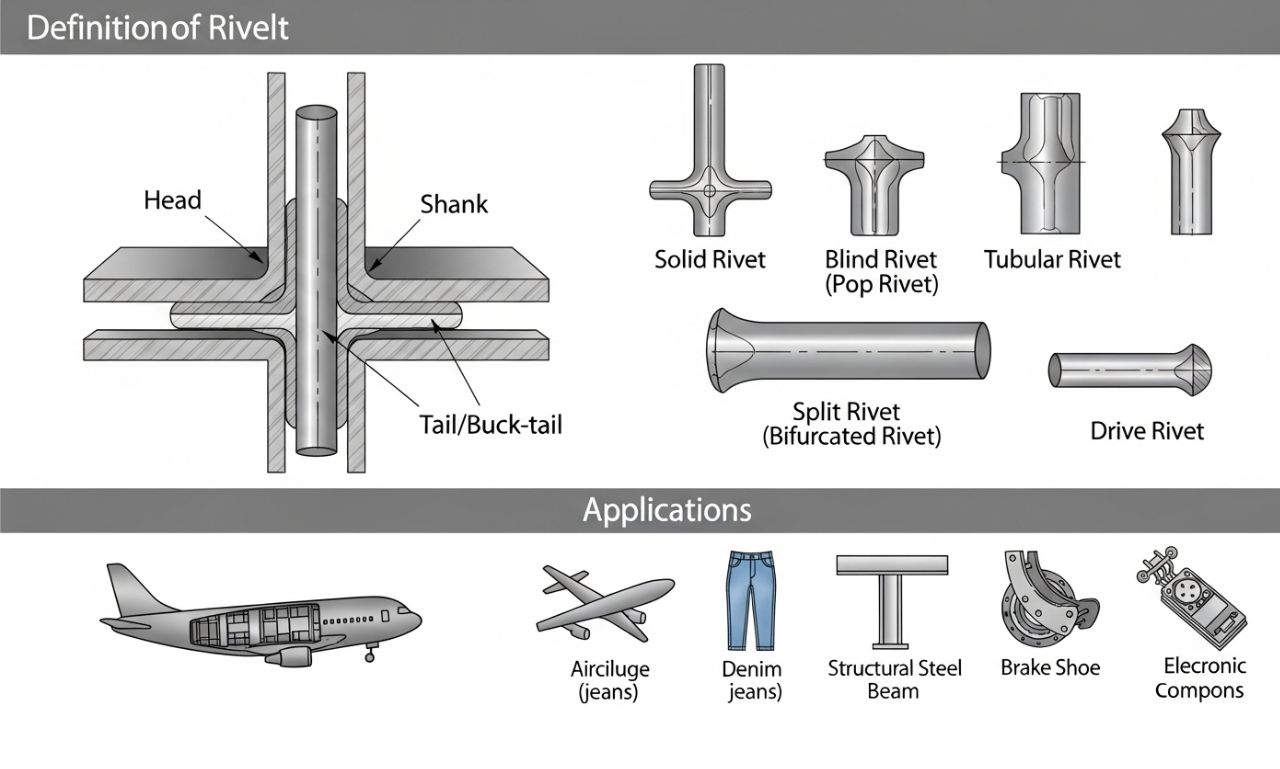
A rivet is a permanent mechanical fastener used to join two or more materials together, usually metal or plastic. It consists of a smooth cylindrical shaft with a head on one end. When installed, the tail end is deformed to hold the rivet in place, creating a strong, durable connection.
In simpler terms, a rivet is a metal pin or bolt that holds materials together, often when welding or screwing is impractical or undesirable.
Components of a Rivet
A typical rivet consists of two main parts:
-
Head: The pre-formed end of the rivet that remains visible on the material surface and provides bearing strength.
-
Shank (or Shaft): The cylindrical body that passes through the materials being joined. The tail is deformed during installation to create a secure hold.
Some rivets also have specialized shapes, such as countersunk heads or dome-shaped heads, depending on the application.
Types of Rivets
Rivets come in several types to suit different applications:
-
Solid Rivets – Traditional rivets that require hammering or a press to deform the tail end; commonly used in aircraft and structural applications.
-
Blind Rivets (Pop Rivets) – Can be installed from one side of the workpiece, ideal when the back side is inaccessible.
-
Tubular Rivets – Have a hollow shank, which requires less force to deform; often used in leatherwork or light metal assemblies.
-
Split Rivets – The tail splits when deformed, increasing grip; used in softer materials.
-
Drive Rivets – Installed by hammering a pin through the center of the rivet; often used in sheet metal and signage.
Applications of Rivets
Rivets are used in a wide variety of industries and projects, including:
-
Aerospace: Aircraft and spacecraft rely on rivets for lightweight, durable connections.
-
Construction: Steel beams, bridges, and structural components often use rivets.
-
Automotive: Car bodies, chassis, and mechanical assemblies utilize rivets for secure fastening.
-
Electronics & Appliances: Rivets provide compact and permanent fastening solutions.
-
DIY and Crafts: Blind rivets are commonly used in home repair, leatherwork, and metal projects.
Rivets are preferred over screws or bolts in some applications because they are permanent, resistant to vibration, and distribute load evenly across joined materials.
Advantages and Disadvantages
Advantages:
-
Permanent and durable connection
-
Resistant to vibration loosening
-
Distributes load evenly
-
Can join different materials
Disadvantages:
-
Permanent; difficult to remove
-
Requires specialized tools for installation
-
Not suitable for applications requiring frequent disassembly
Rivet vs. Bolt: Key Differences
-
Rivet: Permanent, requires deformation of the tail, cannot be easily removed.
-
Bolt: Removable, threaded, and requires a nut to secure; can be tightened or loosened multiple times.
Understanding these differences helps in choosing the right fastener for a project.
Conclusion
The rivet definition encompasses its role as a permanent fastener, essential in industries ranging from aerospace to DIY projects. By selecting the correct type of rivet and understanding its installation process, engineers, builders, and hobbyists can create strong, reliable connections that withstand stress and vibration.