Blood group rareness refers to how uncommon certain blood types are within the global population. While many people are familiar with common blood groups such as O positive or A positive, fewer understand that some blood types are extremely rare and found in only a small percentage of people worldwide. Blood group rareness plays a critical role in medical emergencies, blood transfusions, organ transplants, and genetic research.
Understanding blood group rareness helps hospitals, blood banks, and donors prepare for life-saving situations where rare blood types are urgently needed.
What Determines Blood Group Rareness?
Blood group rareness is determined by genetic inheritance. Blood types are classified mainly by the ABO system and the Rh factor. The combination of these two systems creates common and rare blood groups.
Several factors influence blood group rareness, including:
-
Genetic mutations
-
Ethnic and regional distribution
-
Ancestral bloodlines
-
Population size and diversity
Because blood types are inherited from parents, some rare blood groups remain concentrated in specific regions or communities.
Common vs Rare Blood Groups
Not all blood types are equally common. Some blood groups are widely found across populations, while others are considered rare.
Most Common Blood Groups
Globally, the most common blood types include:
-
O positive
-
A positive
-
B positive
These blood groups make up the majority of the world’s population, making transfusions easier to manage.
Rare Blood Groups
When discussing blood group rareness, certain blood types stand out due to their low frequency:
-
AB negative
-
B negative
-
A negative
These blood groups are found in a much smaller percentage of people, making blood donation and availability more challenging.
The Rarest Blood Groups in the World
Rh-Null: The Rarest of All
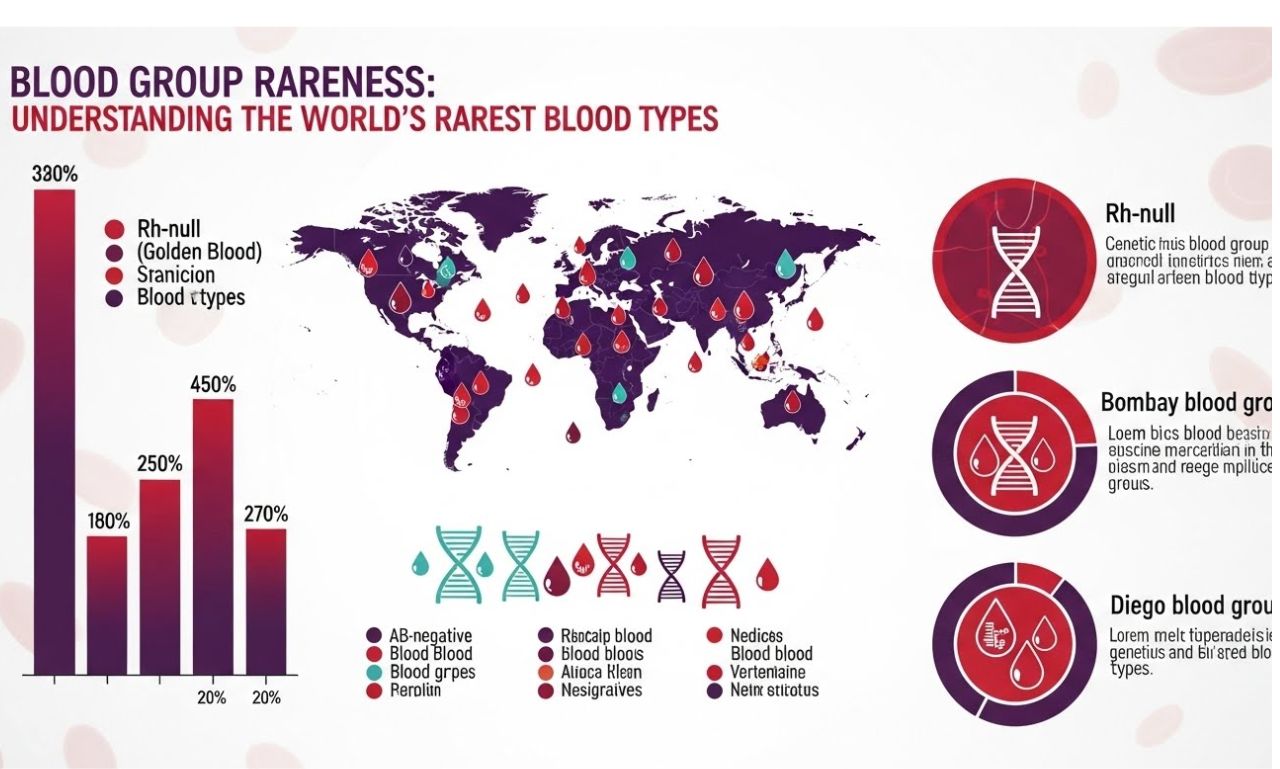
Among all examples of blood group rare ness, Rh-null is considered the rarest blood type in the world. Often called “golden blood,” Rh-null lacks all Rh antigens.
Only a few dozen people worldwide are known to have this blood group. While Rh-null blood can be used for patients with rare Rh deficiencies, finding donors is extremely difficult.
Bombay Blood Group
Another example of extreme blood group rare ness is the Bombay blood group (hh). First discovered in India, this blood type cannot receive blood from any ABO group, including O.
People with this blood group can only receive blood from another Bombay blood group donor, making it medically significant.
Blood Group Rareness and Geography
Blood group rare ness often varies by region and ethnicity. For example:
-
The Bombay blood group is more common in parts of India
-
Rh-negative blood types are more frequent in European populations
-
Certain rare blood antigens appear more often in isolated communities
These geographic patterns help scientists and healthcare systems anticipate rare blood needs.
Why Blood Group Rareness Matters in Medicine
Emergency Transfusions
Blood group rare ness can be life-threatening during emergencies. Patients with rare blood types may face delays if compatible blood is not readily available.
Organ Transplants
Matching blood groups is essential for organ transplants. Rare blood groups can make finding compatible donors more difficult.
Pregnancy and Blood Compatibility
Blood group rare ness also affects pregnancy. Rh incompatibility between mother and child can lead to complications if not managed properly.
Role of Blood Donors in Managing Blood Group Rareness
Blood donors play a vital role in addressing blood group rare ness. Individuals with rare blood types are often encouraged to register with blood banks and donate regularly.
Benefits of rare blood donors include:
-
Helping save lives in critical cases
-
Supporting medical research
-
Assisting patients with chronic transfusion needs
Many countries maintain rare donor registries to ensure quick access during emergencies.
How Blood Group Rareness Is Identified
Blood group rare ness is identified through specialized blood testing. These tests analyze:
-
ABO antigens
-
Rh antigens
-
Additional rare blood markers
Advanced laboratories can detect rare blood characteristics and classify individuals accordingly.
Myths and Facts About Blood Group Rareness
Myth: Rare Blood Groups Are Healthier
There is no scientific evidence that blood group rare ness makes someone healthier or stronger.
Fact: Rare Blood Types Save Lives
People with rare blood groups can play a crucial role in saving lives through donation.
Myth: Rare Blood Means Rare Diseases
Blood group rare ness does not directly cause disease. It mainly affects compatibility during medical procedures.
Future Research on Blood Group Rareness
Medical science continues to study blood group rare ness to improve transfusion safety and genetic understanding. New technologies are helping identify rare blood types faster and store blood more efficiently.
Researchers are also exploring artificial blood substitutes to reduce dependence on rare donors in the future.
Conclusion
Blood group rare ness is a fascinating and medically important topic that affects millions of people worldwide. From rare types like Rh-null to region-specific groups such as the Bombay blood group, understanding blood group rareness helps improve emergency care, transfusion safety, and global health planning.
Raising awareness about rare blood types and encouraging donation can make a life-saving difference for those who depend on compatible blood.