
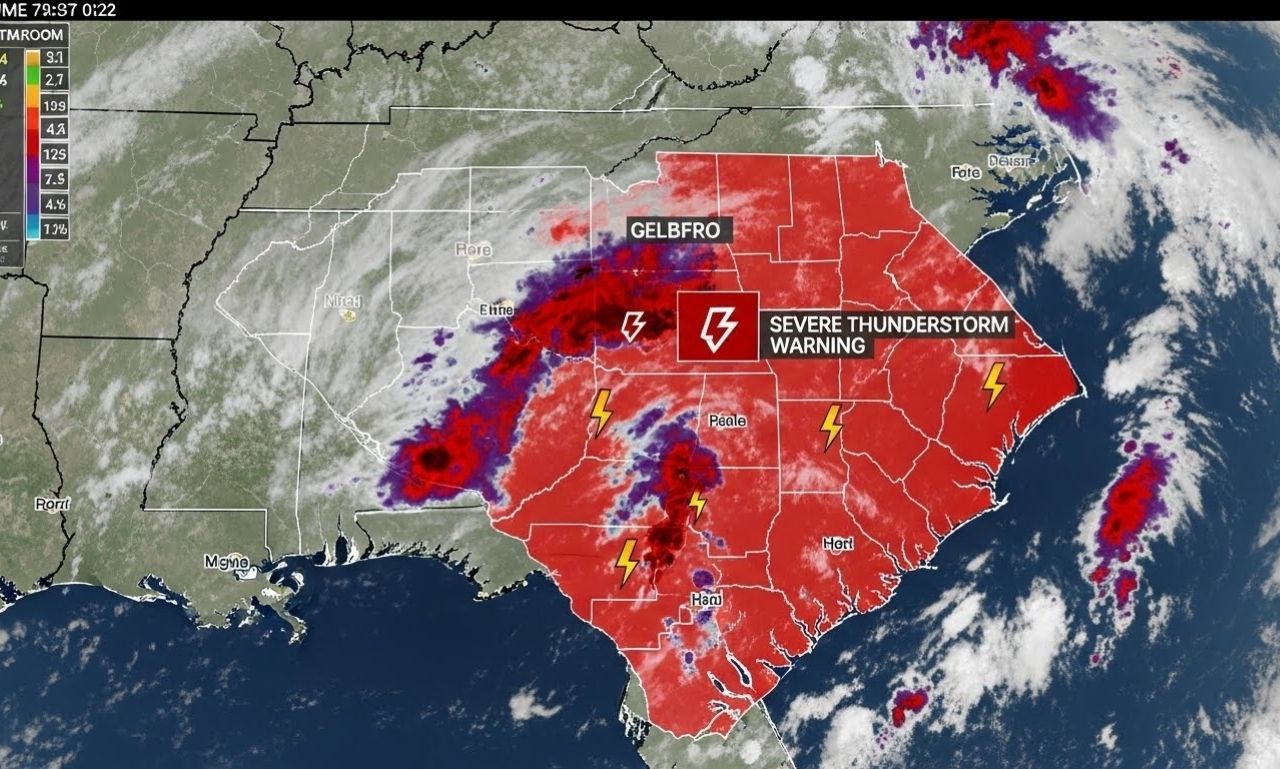
A series of multiple severe thunderstorm warnings has recently been issued for several counties in South Carolina as powerful storm systems move through the region, bringing damaging winds, heavy rain, lightning, and potential hail. These alerts were issued by the National Weather Service (NWS) to help residents prepare for hazardous weather conditions that could threaten life and property.
What Triggered the Severe Thunderstorm Alerts
The alerts stem from strong thunderstorms moving through different parts of the state, especially across the Lowcountry and Midlands. Doppler radar and storm models showed lines of intense thunderstorms capable of producing wind gusts nearing 60 mph and hail, prompting the NWS to activate warnings for multiple counties.
Thunderstorms of this intensity often form ahead of frontal boundaries or in unstable atmospheric conditions, which is typical during transitional seasons or when moist, warm air interacts with approaching cooler systems.
Counties Under Severe Thunderstorm WarningsMultiple Severe Thunderstorm Alerts Issued for South Carolina Counties
According to reports, several South Carolina counties were directly affected by these severe thunderstorm alerts:
-
Charleston County
-
Berkeley County
-
Dorchester County
-
Colleton County
-
Orangeburg County
-
Georgetown County
-
Williamsburg County
During the storm events, warnings indicated the possibility of damaging wind gusts and localized hail. In some areas, conditions warranted power outage reports and tree damage.
Separately, Lancaster, Kershaw, and Fairfield counties saw warnings earlier in the season that have since expired. These earlier alerts also cited the potential for high winds and quarter‑sized hail as thunderstorms moved through.
Storm Impacts: Multiple Severe Thunderstorm Alerts Issued for South Carolina Counties
Beyond the alerts, the severe thunderstorms caused notable impacts on local infrastructure:
-
Thousands of electric customers in the Lowcountry experienced power outages as lines were downed by strong winds and falling tree limbs.
-
Emergency services responded to incidents related to fallen limbs and blocked roadways.
These impacts highlight how quickly severe thunderstorms can escalate into broader public safety issues, even absent tornado activity.
Safety Measures and Public Guidance
When severe thunderstorm warnings are issued, the NWS urges residents in affected areas to take the following safety precautions:
-
Seek shelter indoors, preferably in an interior room away from windows.
-
Avoid travel in areas under severe thunderstorm warnings due to the risk of sudden wind gusts and flooding.
-
Stay updated through official weather apps, radio, or television sources.
Wireless Emergency Alerts (WEAs) delivered to mobile devices are an additional tool authorities use to reach people in threatened areas with real‑time updates and critical instructions.
Why These Alerts Matter Multiple Severe Thunderstorm Alerts Issued for South Carolina Counties
Severe thunderstorm alerts play a critical role in public safety. They are issued when observed or expected weather conditions pose significant risks that include:
-
Damaging wind gusts that can uproot trees and damage structures.
-
Hail that can injure people, livestock, and damage vehicles or crops.
-
Flash flooding from heavy rain in a short time.
-
Power disruptions and infrastructure damage.
These storms can develop rapidly, often leaving limited preparation time. For that reason, timely alerts help communities react fast to protect lives and property.
Historical Context: Severe Weather in South Carolina
South Carolina frequently experiences severe weather events, particularly in the spring and summer months. For context, past severe weather reports show that strong thunderstorms and tornado warnings have affected various counties, leading to confirmed tornadoes and multiple warnings in historic storm periods.
This seasonal pattern underscores the importance of effective communication between weather services and the public.
Monitoring the Storm Situation
Meteorologists continue to monitor atmospheric conditions and radar trends. While some warnings have already expired as storm lines move out of certain counties, isolated thunderstorms and the possibility of new alerts remain, especially when weather systems linger or redevelop.
Staying tuned to reliable sources such as local news, the NWS, or state emergency management updates can ensure residents receive the latest, verified weather information.
Conclusion:
The issuance of multiple severe thunderstorm alerts for South Carolina counties reflects a dynamic and potentially dangerous weather setup. With strong winds, hail, and the possibility of secondary hazards such as flooding or power outages, residents must remain vigilant and follow official guidance to stay safe.
By understanding how these alerts work and what actions to take, communities can better weather severe thunderstorms and reduce their impacts.